

A warning in the patrol traffic
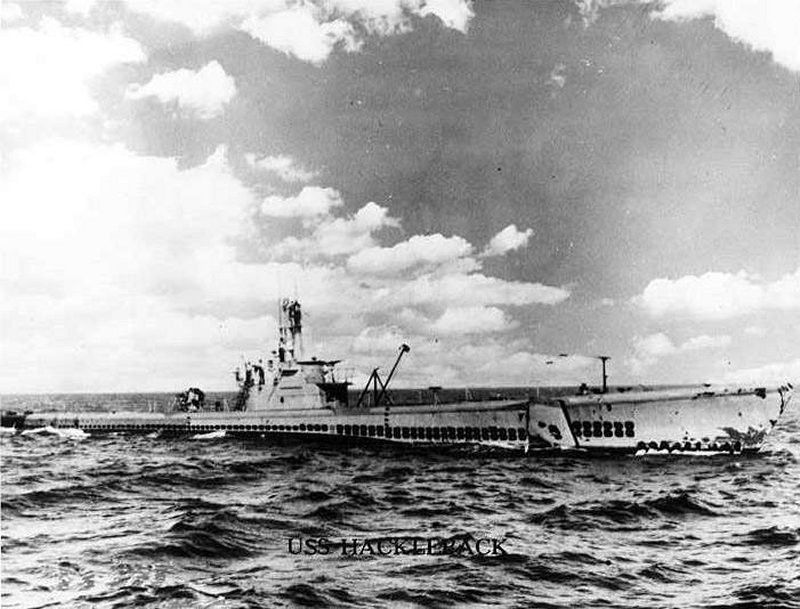
Hackleback was on her first war patrol when she encountered the Japanese force on the evening of 6 April. Earlier that day, the crew had watched patrol craft and aircraft near the Bungo Suido. Their report describes manoeuvring to be ready to surface in case larger ships were coming out that night. YT-Y25
The encounter survives in F. E. Janney’s patrol report. A separate Navy historical account bound into the same scan identifies the force as Yamato’s. Keeping those documents distinct lets us follow what the crew detected at the time without silently giving them every later identification.
From one echo to a formation
At 2028, Hackleback’s SJ radar picked up a weak return about 30,000 yards away. At first it might have been an aircraft. As the return strengthened and its movement became clearer, the crew judged it to be a large warship. They sent a contact report and increased to full pursuit on four engines. The times here retain the report’s I notation. YT-Y25
Further echoes appeared. Janney reported seven contacts, one much larger than the others, and tracked a nearby vessel thought to be part of a destroyer screen. These were radar observations and tactical interpretations in darkness, not a complete list of individually identified Japanese ships.
Kept outside the screen
The nearby destroyer repeatedly closed towards Hackleback. Each time, the submarine turned away, losing ground on the main formation, then tried to resume a parallel course when the destroyer withdrew. During the third approach, Janney expected gunfire and prepared to dive, but the destroyer turned back towards its own force. YT-Y25
No firing by that destroyer is recorded in this passage. The threat nevertheless shaped what Hackleback could do. Maintaining contact at a distance and reaching a useful torpedo position were different problems. The account records the Japanese force turning away at 2155 and contact being lost at 2207.
When the transmitter failed
Reporting had its own difficulties. After the first contact report, Hackleback tried to notify the other submarines on the area radio frequency, but the transmitter broke down. The crew then heard their message repeated on the fleet broadcast within ten minutes of sending it. Subsequent reports were repeated too; the transmitter was restored within twenty minutes. YT-Y25
At 2300, the fourth report finally went out on a congested radio circuit, giving the estimated course, speed and time of lost contact. Janney explained that Threadfin’s encrypted reports confirmed his information, leaving nothing further to add through that channel. By 2337, unable to regain contact, Hackleback turned towards her assigned patrol area.
Two submarines, separate viewpoints
Threadfin describes a different position, an initial reporting requirement and a separate attempt to get a torpedo shot. Hackleback’s report adds the pressure of the destroyer screen and the fragility of the radio link. Neither account should stand in for the other. YT-Y24 YT-Y25
Their reports helped make the Japanese movement known. Establishing exactly when each headquarters received and acted on them still requires the corresponding communications and command records. Neither submarine’s account is an eyewitness description of the next day’s sinking.
Read The Last Sortie for the departure and Under Carrier Attack for the battle that followed.