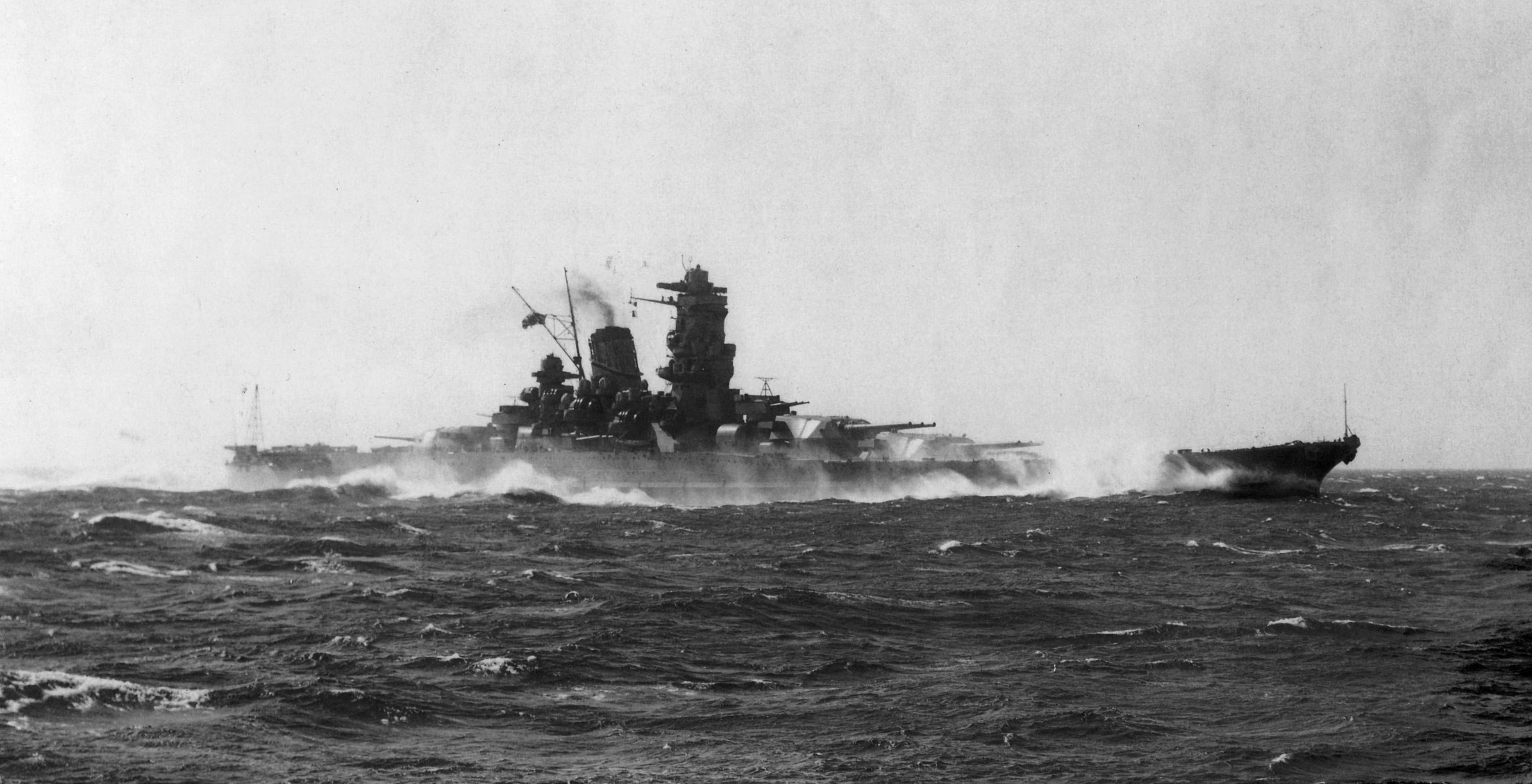

The ship within the force
Yamato sailed with Yahagi and eight destroyers for an operation intended to attack the ships supporting the invasion of Okinawa. The order required cooperation with aviation and forces already in the battle area. It records what the force was meant to do, rather than proof that the necessary cooperation could be achieved. YT-Y05
The opening chapter follows the departure. The orders chapter separates planned movement from recorded movement.
Weapons needed an opportunity
The battleship’s heavy armament could threaten surface targets she reached. On 7 April, however, carrier aircraft attacked before she reached the intended engagement area. Miyamoto’s survivor account describes repeated attacks and increasing list, with no effective fighter cover during the decisive phase. It is an operational perspective, not a complete technical specification of the ship’s final weapons fit. YT-Y01
The 46 cm gun profile examines the main battery through the original American technical investigation. The Type 96 profile explains the light anti-aircraft gun’s magazine and control limits. Dated machinery specifications, armour details and a reconciled final anti-aircraft fit still require additional records.
Fuel and endurance
The operational fuel evidence does not yet supply a certified final bunker total for Yamato. An early postwar survey describes a return allowance for the surface operation, but not an individual ship inventory. The fuel chapter explains why loading restrictions, transfers and force allocations cannot be used interchangeably. YT-Y14
Loss and testimony
The Japanese battle report records the loss on 7 April. Its shortened form omits an own-force-status section, limiting what can be reconstructed from it alone. Survivor interviews add experiences and observations, but not a complete personnel accounting. YT-Y04
The assessment considers survival and arrival off Okinawa as distinct alternatives.