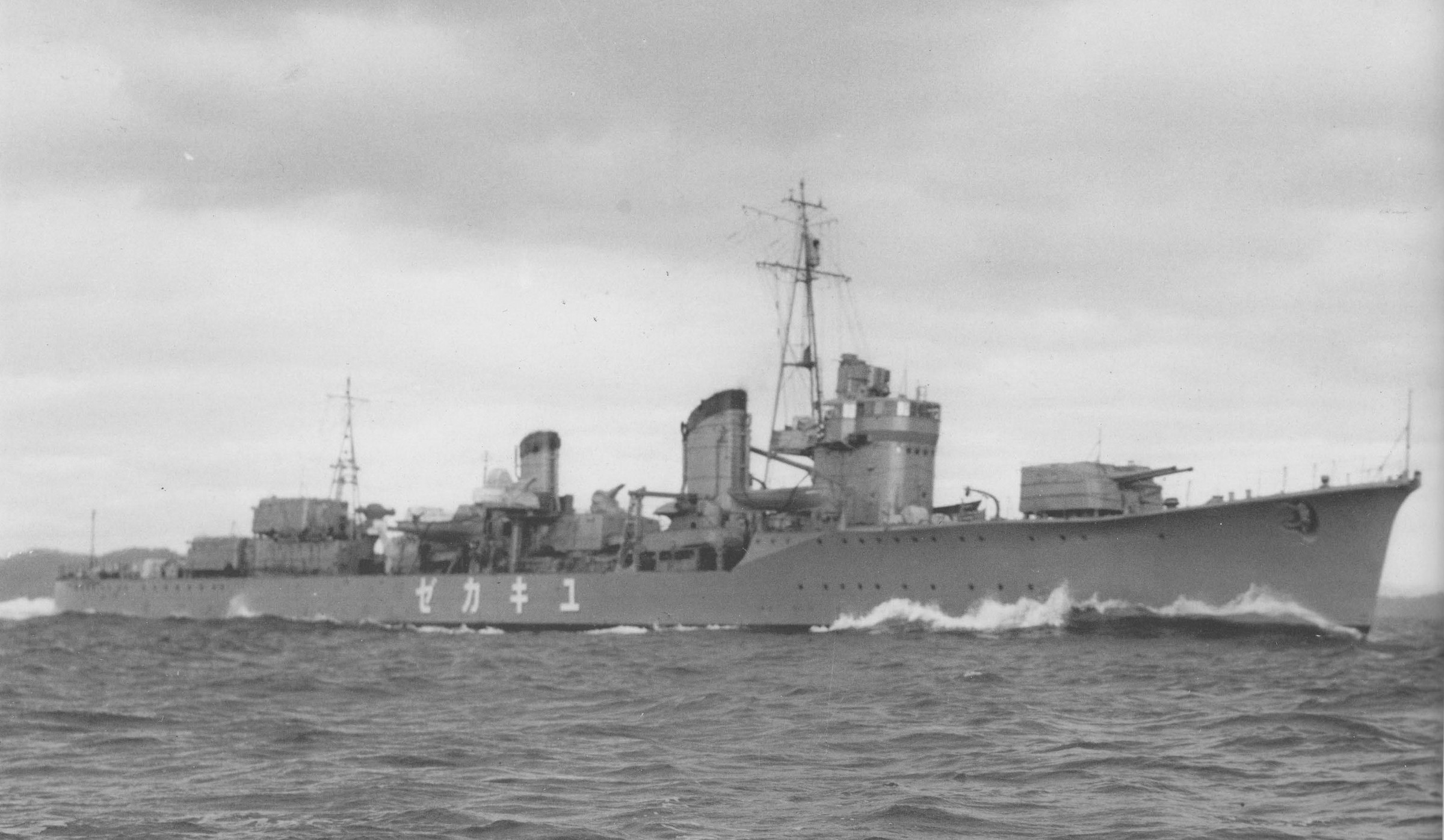


Out with Yamato
Yukikaze left Tokuyama with Yamato’s force on 6 April 1945. The Second Destroyer Squadron’s report lists her among the eight destroyers accompanying the battleship and the light cruiser Yahagi. The intended approach was through the East China Sea towards Okinawa, with an attack at dawn on 8 April. YT-Y28
The copy examined here is the English version printed in the US Strategic Bombing Survey’s 1946 Campaigns of the Pacific War. It preserves a Japanese operational report through an American publication. It is not a facsimile of the original Japanese manuscript, and its times remain the report’s recorded times.
Commander Miyamoto’s separate postwar interrogation places Yukikaze in the 17th Destroyer Division with Isokaze and Hamakaze. He described a ring around the main ships whose relative positions changed with the course. A destroyer’s place in that screen was part of a moving formation, rather than a fixed station on a map. YT-Y02
A force coming apart
The squadron report records the problems accumulating before and during the air attacks: Asashimo falling behind with engine trouble, American aircraft tracking the force, and then bomb and torpedo attacks on Yamato, Yahagi and the destroyers. By the afternoon, the formation was becoming a collection of sinking or damaged ships. YT-Y28
Yukikaze remained able to act. The report’s 1450 entry names her and Hatsushimo beginning to pick up survivors. It had already recorded Fuyutsuki taking on rescue duties. These entries put the smaller ships at the centre of what happened after the striking force had lost its main purpose.
They do not give Yukikaze a complete passenger list. The report supplies neither a ship-by-ship rescue total nor the names of all the men recovered. A precise number for Yukikaze would need evidence beyond this brief chronology.
Through the night to Sasebo
The report marks the recovery work complete at 1902. That entry describes the operation as its compilers understood it; it cannot establish that nobody alive remained in the water. Later it records Isokaze being scuttled after her personnel had been transferred, followed by Hatsushimo and Yukikaze departing for Sasebo at 2250. It does not name the ship that delivered the scuttling blow in that entry. YT-Y28
At 1000 on 8 April, the two destroyers are recorded arriving at Sasebo. Fuyutsuki had arrived earlier; the badly damaged Suzutsuki followed later that day and entered a dry dock. The return entries distinguish the four ships that came back from the battleship, cruiser and destroyers lost at sea.
For Yukikaze, surviving the attacks made the rescue and return possible. For the force as a whole, those arrivals marked the aftermath of a failed sortie: ships came home, but the planned attack off Okinawa had not taken place.
What the surviving account can tell us
This short report gives Yukikaze a documented place in the departure, recovery work and return. It offers much less about individual decisions aboard her bridge, her exact ammunition expenditure or the experiences of the men brought aboard. Its reported aircraft losses and damage estimates should not be treated as independently confirmed results.
Read The Men and the Record alongside the profiles of Fuyutsuki and Isokaze. Together they show different parts of the same disaster: rescue remembered by a survivor, rescue recorded by a squadron, and a destroyer that did not return.