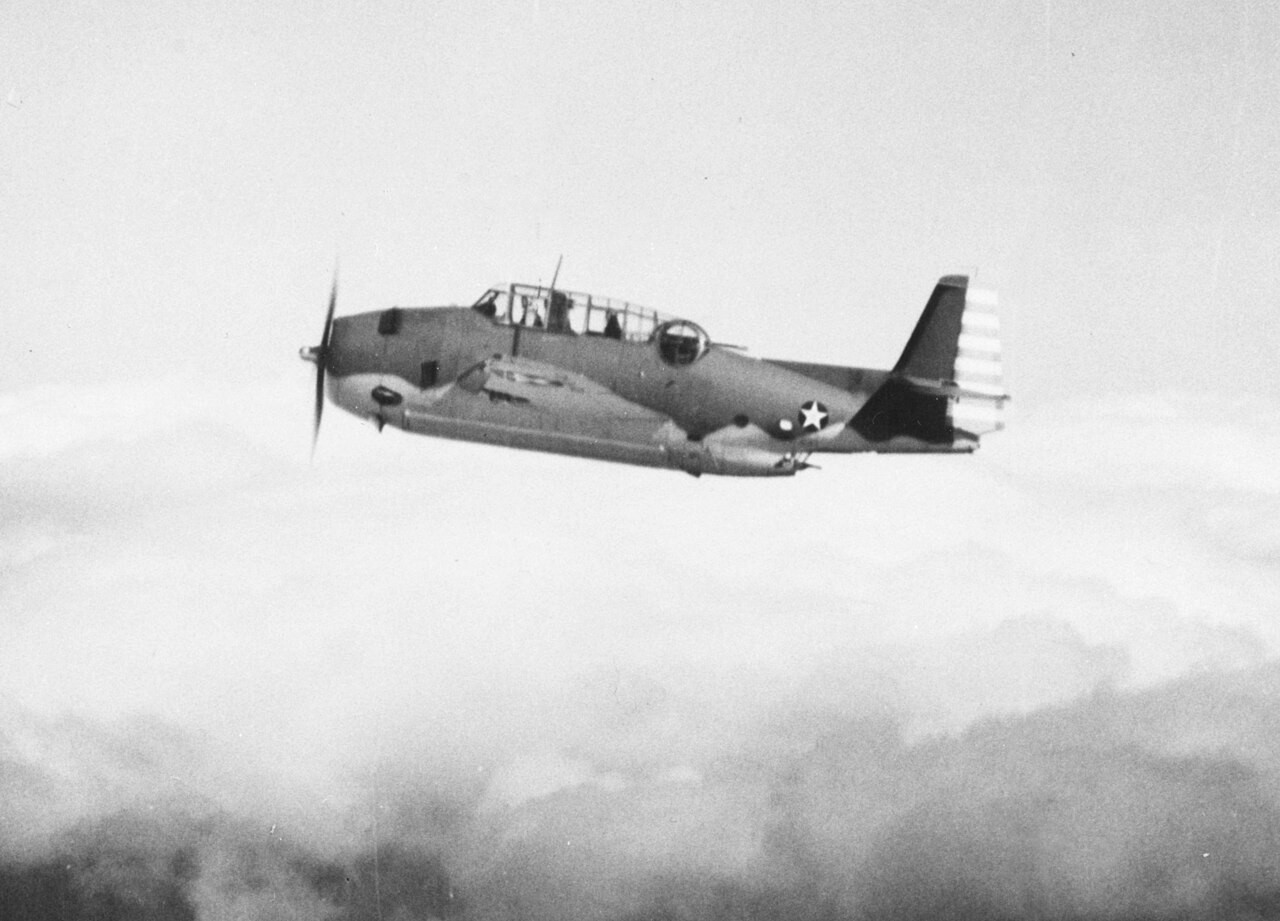


One squadron, two aircraft types
VT-8’s main force flew Devastators from Hornet. A detachment had remained behind to convert to the new Grumman aircraft; six TBF-1s subsequently reached Midway. Their attack began from the island, not from Hornet’s flight deck. M54
The distinction matters whenever the squadron’s losses are discussed. The carrier group and island detachment had separate launches, aircraft and crew complements. The TBF-1 also needs to be distinguished from later Avenger versions: a specification for a General Motors-built TBM is not automatically a specification for these six aircraft.
The first attack
Nimitz’s original report records six TBFs dispatched with torpedoes and describes their attack against heavy fighter opposition. Only one badly damaged aircraft returned. The report could not reconstruct the fate of the whole formation from its surviving pilot’s observations. Its accompanying claim of a hit is not treated here as a confirmed result. M01
The returning crew were pilot Albert Earnest, turret gunner Jay Manning and radioman Harry Ferrier. Manning had been killed; Earnest and Ferrier survived. One aircraft coming home therefore did not mean that all of its crew had survived the attack. The names and individual fates here come from the later NHHC account, separate from the fleet report’s aircraft accounting. M54
Better equipment still needed protection
Nimitz considered the TBF an improvement over the TBD. He nevertheless concluded that it could not attack ships defended by fighters without fighter support. The lesson was about the whole operation: equipment, escort and coordination had to work together. M01
The Avenger’s debut is consequently a useful test of a simple counterfactual. Replacing all the Devastators with the newer type might have changed the odds, but these six aircraft show why that substitution alone cannot justify a prediction of success.
Continue with Midway Under Attack and compare the Devastator profile.