

Built to search
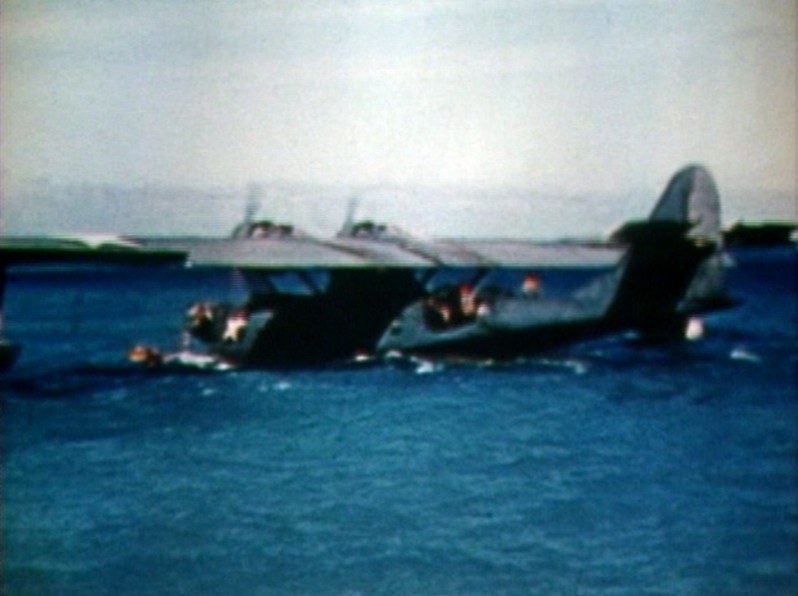
The Catalina was a patrol bomber with a high wing and a boat-shaped hull. The PBY-5 was a flying boat; the PBY-5A added retractable landing gear for amphibious operation. These differences matter when identifying photographs or describing where a particular aircraft could land. M55
The museum’s PBY-5 specification gives a 104-foot wingspan and a crew of seven to nine. These are useful measures of the aircraft’s scale, rather than a crew list for an individual mission. The British and American reports cited below usually say Catalina or PBY without resolving every aircraft’s precise variant. M55
Finding Bismarck
On 26 May 1941, a Catalina’s report put the pursuing British forces back in contact with Bismarck. Somerville records the report as made at 1030 and received at 1050. The delay was part of the operational problem: a sighting had to reach the people who could act on it. B04
He then records shrapnel damage to the Catalina’s hull and loss of contact. Ark Royal’s aircraft took up the task of shadowing. Finding the battleship and keeping a current position on her were separate achievements. B04
Searching—and attacking—at Midway
Before dawn on 4 June, PBYs resumed reconnaissance; their reports helped locate the approaching carrier force. They also had an offensive role. Nimitz records four torpedo-armed PBYs sent on a night mission, with three making attacks. His damage estimates were optimistic; the later official Hornet history identifies a torpedo hit on the oiler Akebono Maru. M01 M52
Nimitz praised the PBY’s long-range search capability while warning that it could not reliably maintain contact in strong enemy air opposition. A wide search radius did not guarantee an uninterrupted picture of the battle. M01
Compare Contact Regained with First Contacts: in both stories, reconnaissance created an opportunity that other forces still had to exploit.