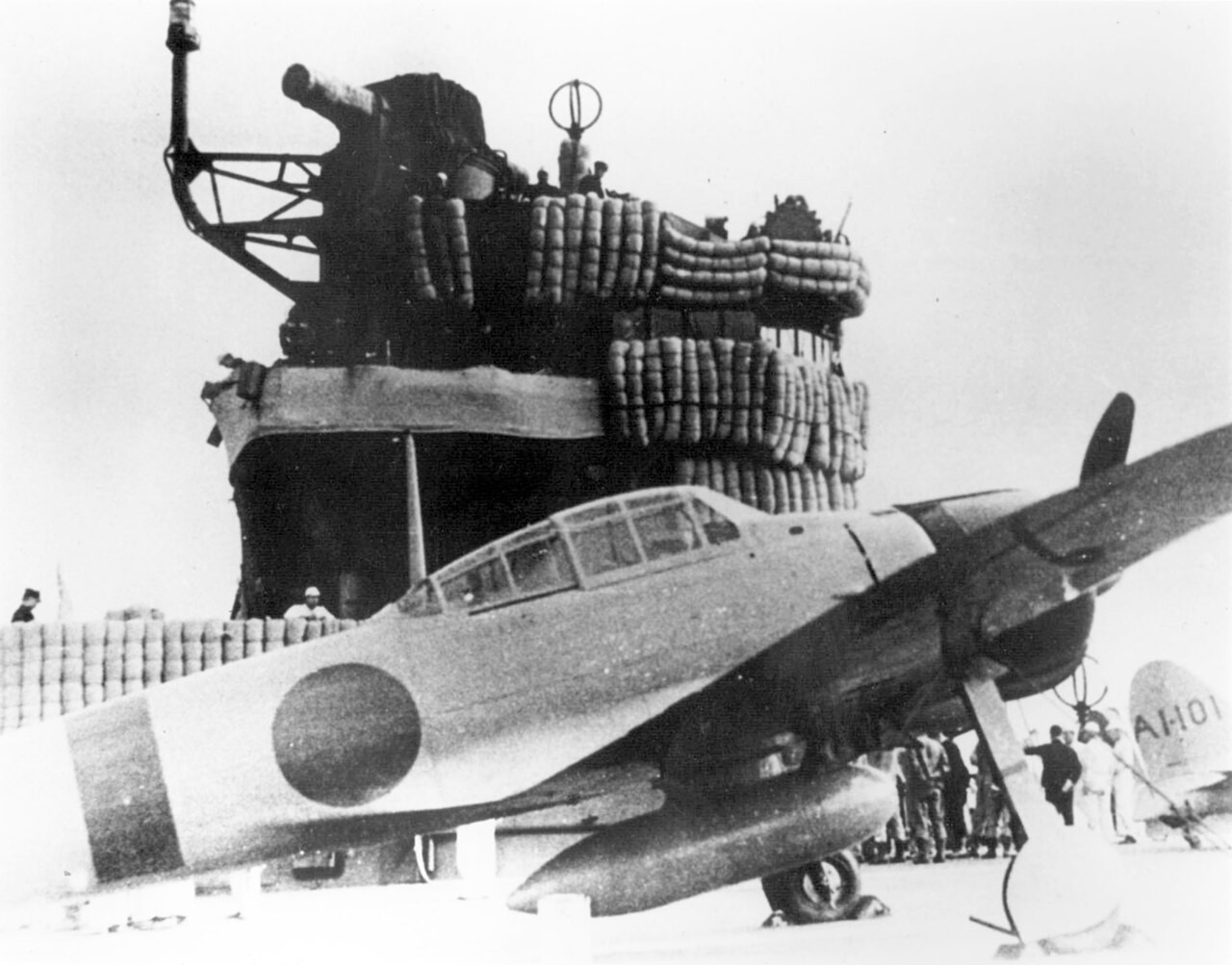


A dangerous opponent
The A6M2 was the Zero variant used by the Japanese carrier force at Midway. A single pilot operated a fighter armed with two 20 mm cannon and two 7.7 mm machine guns. Its light construction helped give it outstanding manoeuvrability, but it lacked armour and self-sealing fuel tanks. Those were consequential compromises when enemy fire reached the aircraft. M51 M52
Nimitz’s report rated the American F4F-4 below the Zero in speed, manoeuvrability and climb. Yet it also valued the Wildcat’s protection and armament. The comparison helps explain why a pilot’s choice of tactics mattered: the two fighters did not offer the same strengths. The report’s claimed victory ratio is not adopted here as a verified score. M01
Escort was a mission, not a guarantee
The Japanese organisation table assigns six fighters to Hiryū’s first counterattack. It then records that two engaged enemy torpedo aircraft on the way and did not participate in the carrier attack. Six aircraft allocated to an escort did not mean six stayed with the bombers throughout their mission. M14
The second counterattack again had six fighters, this time drawn from both Hiryū and Kaga. Aircraft and pilots could continue fighting from another carrier, but only while a usable flight deck remained. M14
Protecting the fleet
A combat air patrol is the fighter force assigned to defend the ships. Its job requires more than finding and shooting down attackers: it must be in the right place, at the right height, with time to intervene.
After Midway, Nimitz recommended patrols at more than one altitude. That was a command lesson drawn from the battle, not evidence that every Japanese fighter had been permanently drawn down to sea level. M01
Follow the competing demands on the fighters in Midway Under Attack and Hiryū Fights Back.