A connected ship profile

Bismarck

A battleship’s strength lay in the ship, her weapons and the people who had to make them work together.

Profile · Evidence and limits

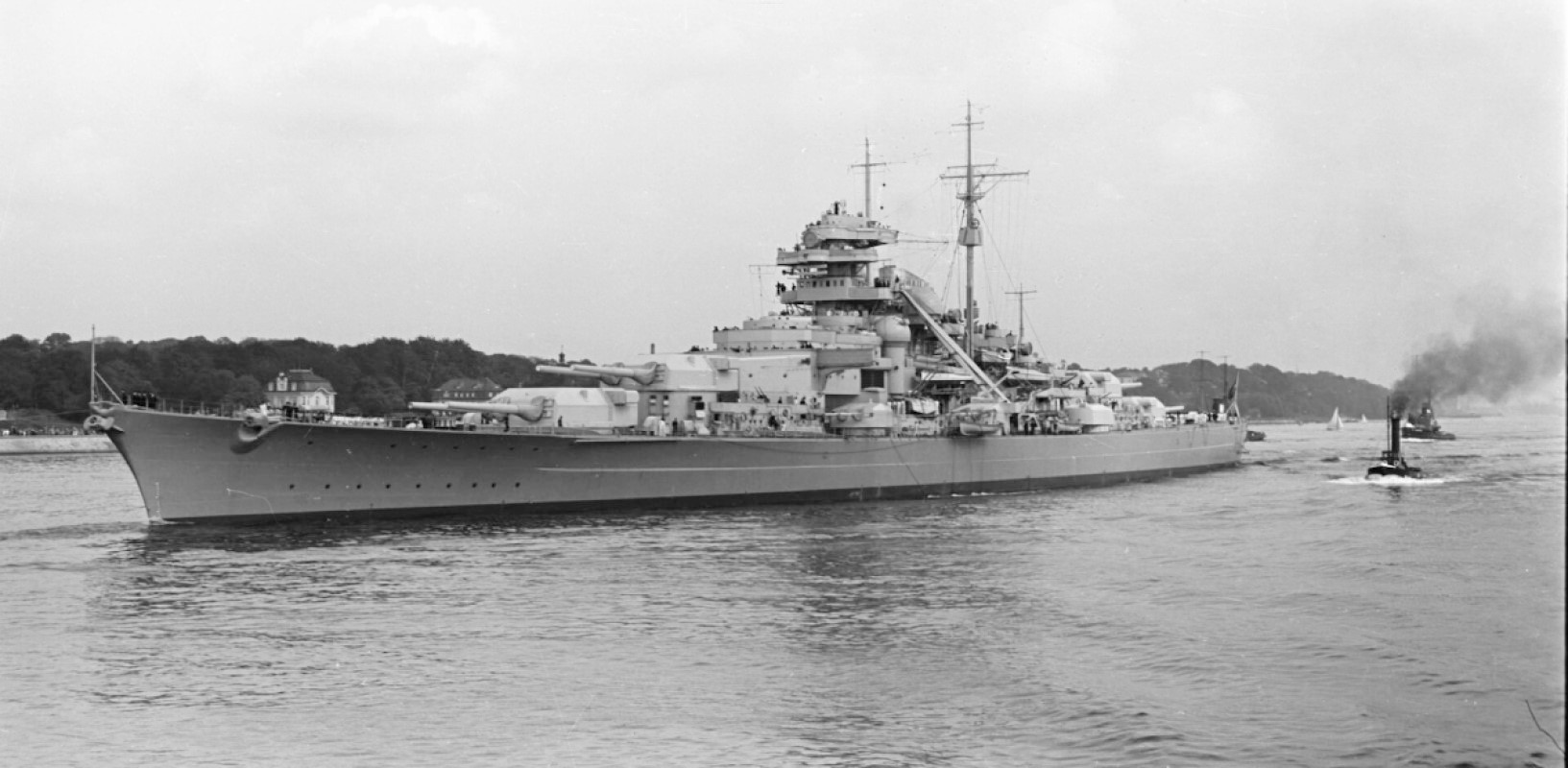
Bismarck seen broadside with tugboats near her stern.

1940

Bismarck off Blankenese, as dated by the archive. This view predates the May 1941 operation.

Bundesarchiv, Bild 193-04-1-26 / CC-BY-SA 3.0; Commons restoration by Hohum · Source · CC BY-SA 3.0 de · Resized and compressed web copy

Commons supplies a restored version; its history records brightening and cleanup.

From shipyard to service

The British report compiled from survivors’ interrogations places Bismarck’s construction at Blohm & Voss in Hamburg, with launch in February 1939 and commissioning in August 1940. Its account then follows trials and training in the Baltic. These milestones are reported through a wartime intelligence compilation; the underlying shipyard and commissioning records have not yet been compared. B24

The main battery

Four twin turrets carried the eight 38-centimetre guns: two turrets forward and two aft. The artillery testing report praised the arrangement and the ship’s steadiness as a gun platform. It also examined the practical work of observing salvos and directing fire. Gun calibre alone cannot describe that system’s effectiveness. B08

Preparing to fight

The sea phase of the artillery trials began on 19 March 1941 and ended early on 2 April. Weather, equipment readiness and the shortened schedule limited the testing completed. This gives us evidence about preparation, with favourable findings as well as unresolved work. It does not make every trial defect a cause of the later sinking. B08

Further profile work will cover armour, machinery, secondary and anti-aircraft weapons, radar and embarked aircraft, with dated configurations and source checks. The construction chapter explains what the trial report presently supports.

Making the battery useful

The trial report considered divided salvos as well as firing the whole battery together. Observing the splashes was part of correcting the aim; a larger salvo could obscure information as well as deliver more shells. B08

The naval-gunnery profile explains that process alongside Rodney’s experience. These accounts describe a weapon system being operated and assessed, rather than a contest decided by calibre alone.
Photographs

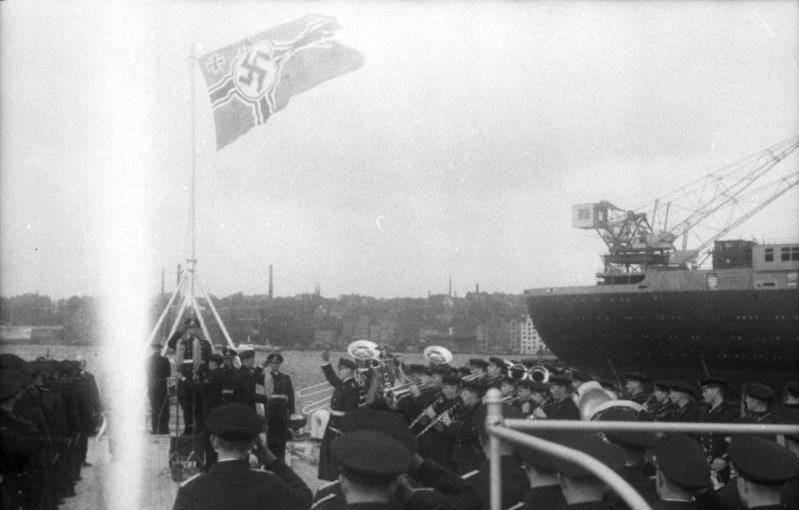
Personnel gathered aboard Bismarck at her commissioning.

24 August 1940

A scene from Bismarck’s commissioning, months before her first Atlantic operation.

Bundesarchiv, Bild 101II-MN-1364-01 / Peter / CC-BY-SA 3.0 · Source · CC BY-SA 3.0 de · Resized and compressed web copy

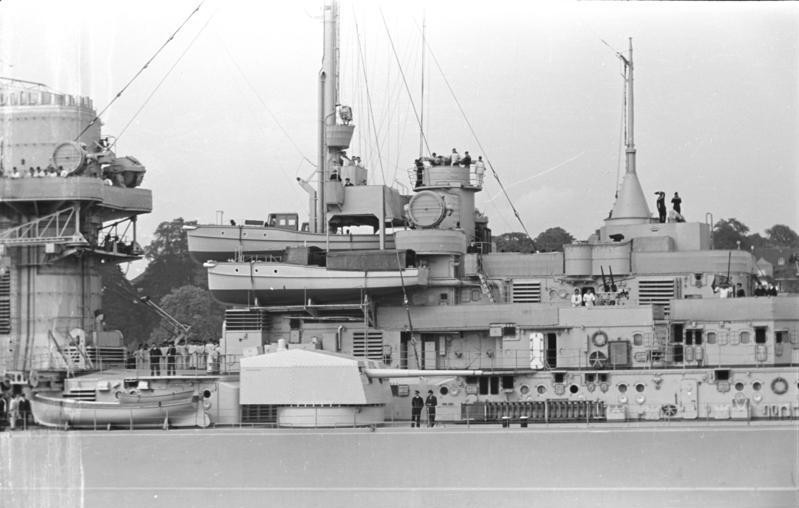
A close view of Bismarck’s deck and superstructure.

1940

Bismarck’s superstructure, boats and shipboard equipment in a detail view dated 1940 by the archive. This photograph predates the Atlantic operation.

Bundesarchiv, Bild 193-06-7-16 / CC-BY-SA 3.0 · Source · CC BY-SA 3.0 de · Resized and compressed web copy

Evidence within reach

Sources for this page

Open a note for the passage, inspection status and limits. Source records link to the available documents.

B24Bismarck: interrogation of survivors

Contemporary intelligence compilation · modern web transcription

Passage: Section IV, printed pp.8–10: building and training chronology

Reported construction milestones, commissioning, trials and joint training. Survivor reports of final-action damage and orders to scuttle.

Checked: Introduction and selected section IV passages read on 18 October 2026. Final-action and sinking passages on printed pp.23–25 reread for The Final Battle. Rescue passage and introductory totals rechecked for Rescue and Remembrance.

Limits: Original page images not inspected. The report warns that prisoner statements could not always be verified. Shipyard records and commissioning documents not compared. Its approximate March departure date conflicts with B08; no exact date is adopted here. The report acknowledges disagreement about the cause of sinking. Reported scuttling orders and charges do not establish an exact flooding sequence or an exclusive cause; its embedded British narrative is not independent corroboration of Tovey. Its rescue total is provisional and differs from B11/B26. The claim of 100 Sachsenwald rescues is not adopted; it conflicts with the later named roll.

View full source record →
B08Bismarck artillery testing report

Contemporary technical report through modern English translation

Passage: Sections I.1–2 and II.A.3: trial programme and main battery

Main armament, favourable observations, the curtailed trial programme and recommendations for further work.

Checked: Selected translated sections read on 18 October 2026. Section II.A.3 reread for divided salvos and observation; German original remains unchecked.

Limits: German archival original not inspected. Report dated after the sinking. Trial defects do not establish the condition at departure; recommendations do not prove causes of loss. The March departure date differs from B24.

View full source record →

Photograph

Enlarged historical photograph

Web copy resized and compressed; original framing retained. Open image file ↗