A connected ship profile

HMS Ark Royal

Ark Royal’s striking power depended on a moving flight deck, serviceable aircraft and crews who could find their way back to it.

Profile · Evidence and limits

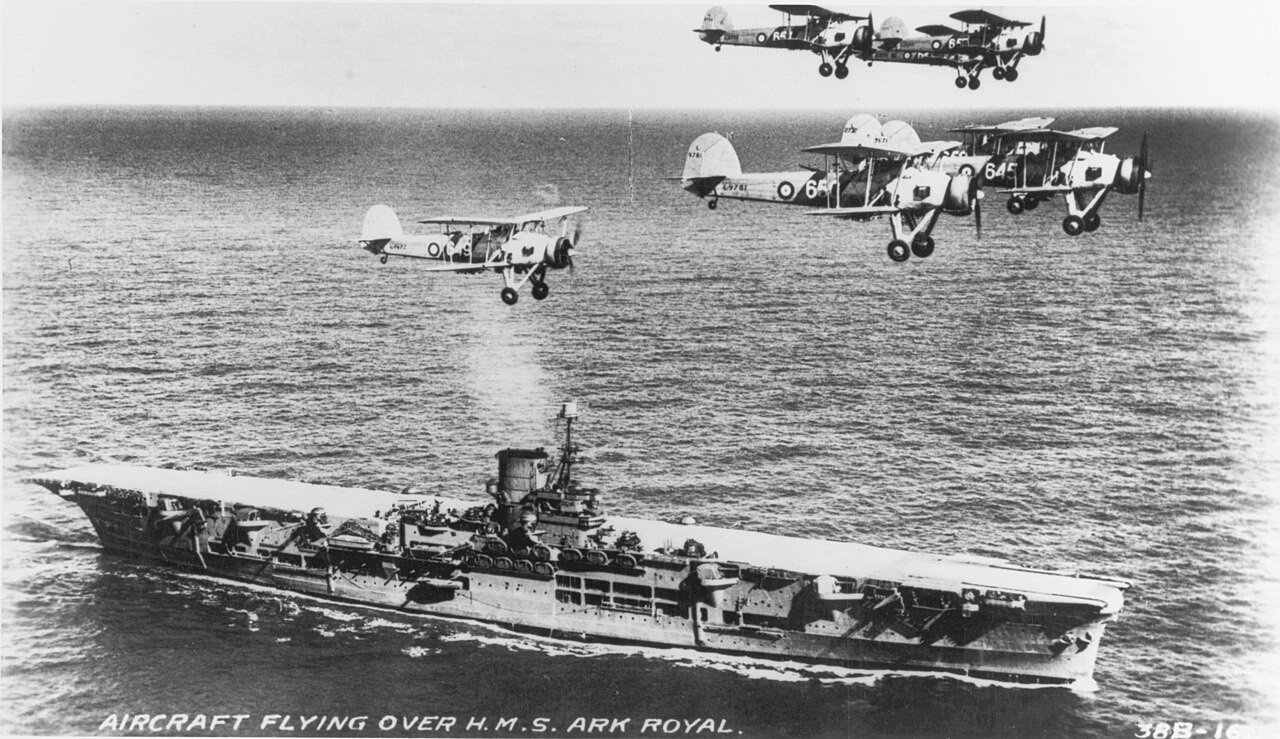
Ark Royal at sea with a formation of Swordfish flying overhead.

Circa 1939

Ark Royal with Swordfish overhead. This photograph shows the carrier before the Bismarck pursuit.

United Kingdom Government / NHHC, NH 85716; courtesy Donald M. McPherson · Source · Public domain (source statement)

A flight deck in heavy weather

Ark Royal brought aircraft within reach of Bismarck on 26 May 1941. Somerville’s report records ten Swordfish taking off on the morning search. Fulmars were also available, but the weather prevented their planned use to increase search coverage. Aircraft carried aboard and aircraft usable for a particular task were different measures of strength. B04

The sea affected work before an aircraft ever left the deck. Spray made the surface slippery, and machines slid bodily across it. The report describes the stern’s rounded flight-deck edge rising and falling dramatically. Deck handling, take-off and recovery had to be managed alongside the search itself. B04

Search, shadow and strike

Once contact had been gained, aircraft fitted with long-range tanks helped maintain it. Shadowing meant following the enemy and sending updated reports so that other forces could find him. These machines were performing a different job from the torpedo force being prepared aboard the carrier. B04

The first striking force mistakenly attacked Sheffield. One aircraft had already returned after take-off; others released weapons against the friendly cruiser, while some recognised the error and held their torpedoes. It would be misleading to count every aircraft launched as a completed attack on Bismarck. B04

Turning aircraft around

The second force also numbered fifteen aircraft. Because serviceable machines were limited, most had to be drawn from those just returned, refuelled and rearmed. This was another mission flown largely with reused aircraft, not fifteen fresh machines waiting untouched in reserve. B04

The armourers changed the torpedo firing mechanisms and depth settings. Crews received instructions to contact Sheffield before attacking. The second attempt therefore combined a new weapon configuration with a corrected route to the target. B04

Bringing the crews home

After the evening attack, insufficient light remained for another strike. Somerville judged that finding the target, recognising friendly ships and recovering aircraft would all become too difficult. The remaining effort went into shadowing and preparing for dawn. B04

Ark Royal’s contribution was an operating system of ship, aircraft, information and people. Her nominal capacity alone cannot tell us how many useful sorties she could generate in those conditions. Full hull, machinery and dated air-group specifications remain a separate research task.

Follow the operation through Contact Regained and the carrier attacks.
Photographs

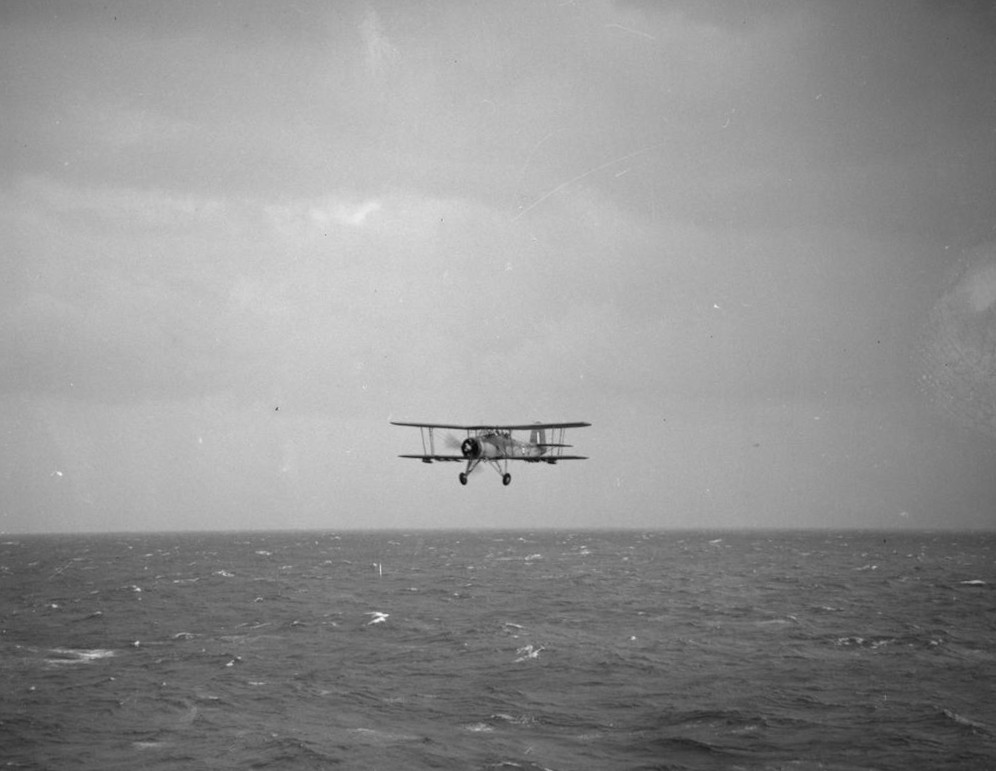
A Swordfish flying low over the sea beside Ark Royal.

May 1941

The IWM catalogue identifies this Swordfish as returning to Ark Royal after a torpedo attack on Bismarck. It does not establish an individual aircraft’s hit.

S. J. Beadell / Imperial War Museums, A 4100 · Source · Public domain (source statement)

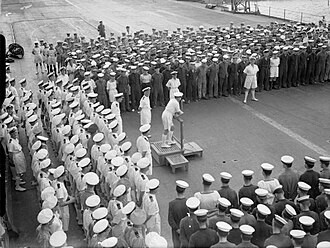
Ark Royal’s ship’s company assembled on the flight deck as Somerville addresses them.

October 1941

Somerville addresses Ark Royal’s officers and crew on the flight deck. This later photograph is not a scene from the May pursuit.

S. J. Beadell / Imperial War Museums, A 5823 · Source · Public domain (source statement)

Evidence within reach

Sources for this page

Open a note for the passage, inspection status and limits. Source records link to the available documents.

B04Somerville’s despatch

Contemporary command report · later official printed edition

Passage: PDF pp.15–17 / Gazette pp.4861–4863, paragraphs 10–15, 22–24, 28–32 and 41–42

Identification failures, reported torpedo settings and revised instructions for the second striking force. Search conditions, the distinction between sighting and receipt times, the handover to carrier aircraft and limits on Renown’s engagement. Sheffield’s guidance of aircraft, splinter casualties and handover to destroyers; Dorsetshire’s approach from convoy SL 74.

Checked: Selected passages compared visually with the printed edition on 18 October 2026. For Contact Regained, PDF p.15 / Gazette p.4861 visually checked, paragraphs 6–18. For equipment profiles, PDF pp.15–17 / Gazette pp.4861–4863 re-rendered and visually inspected: weather, serviceability, search equipment and crew roles. Catalina profile: PDF p.15 / printed p.4861 rechecked visually for paragraphs 10–15. Supporting-ship update: PDF pp.16–18 / Gazette pp.4862–4864 visually inspected, especially paragraphs 21–24, 30–37, 44 and 50.

Limits: The transcription and printed version transmit the same report. Individual aircraft loads, the exact torpedo mark and confirmed damage require separate records. Report timestamps and receipt times remain distinct; the original Catalina and carrier-aircraft messages have not been compared.

View full source record →

Photograph

Enlarged historical photograph

Web copy resized and compressed; original framing retained. Open image file ↗