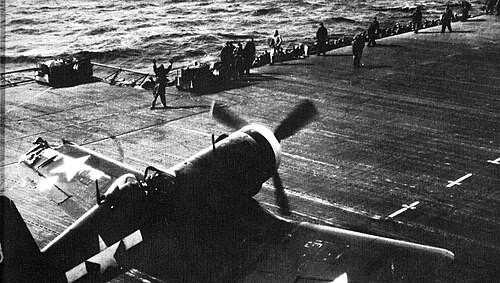


A fighter in the shipping strike
On 7 April 1945, Huntington’s F4U-1D flew from Bennington with a 500-pound general-purpose bomb. The aircraft action report identifies both the variant and the load. Neither entry should be stretched into a specification for every Corsair, or even every Corsair sortie that day. YT-Y03
The narrative explains why this was an unusually small Marine contribution to the formation: other Corsairs intended for the strike remained in the hangar during the hurried launch. Huntington flew among the carrier’s other aircraft.
Through the clouds
The report describes a bombing run against a cruiser identified as Agano class. Huntington began his run from about 6,000 feet and reported releasing at 1,500 feet. The attack table calls the technique bombing; the narrative describes a dive of about 45 degrees. These are reported details of this run, not recommended operating limits for the aircraft. YT-Y03
The form records no enemy aircraft encountered. It does record intense medium and light anti-aircraft fire. Absence of an aerial opponent did not make the approach undefended.
The view after release
Huntington reported an effect near the cruiser’s forward turret and saw a torpedo running towards the ship. His report therefore places bomb and torpedo attacks close together in the pilot’s experience. It does not establish which weapon caused a particular internal failure. YT-Y03
The claims about ships sinking elsewhere in the formation are less secure than the entries for his own aircraft. Recognising that difference lets us use a vivid first-hand report without treating every distant observation as a confirmed result.
Return to Under Carrier Attack or follow the weapons profile for the distinction between a carried bomb, a reported hit and demonstrated damage.