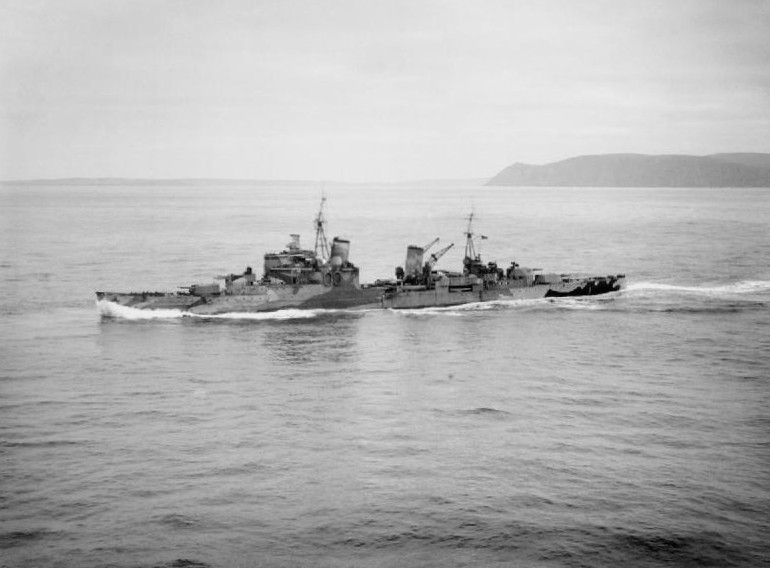


Sent ahead to shadow
Somerville detached Sheffield to close and follow Bismarck. The signal ordering that movement was not repeated to Ark Royal; a later message containing the information had arrived but had not been decoded before the carrier’s first strike departed. The aircraft crews therefore searched without knowing that a friendly cruiser was near their intended target. B04
Recognising the mistake
An aircraft’s radar found Sheffield through the poor conditions. Eleven torpedoes were dropped at her. The cruiser manoeuvred to avoid them and, according to Somerville, recognised the error quickly enough to withhold fire at the attacking aircraft. Several torpedoes exploded prematurely. Avoidance, recognition and weapon failures all belong to this episode; no single one explains it alone. B04
The experience changed the next attempt. Ark Royal’s second strike was ordered to contact Sheffield before attacking. The cruiser was to guide the aircraft by radio direction finding, helping them reach a known friendly ship before proceeding towards Bismarck. B04
A reference point in bad weather
Sheffield supplied Bismarck’s bearing and distance. When cloud broke up the attack, individual aircraft returned to the cruiser for fresh directions. Finding the enemy was a repeated task, dependent on reports and renewed contact, rather than a single discovery that solved the pursuit. B04
Shadowing also exposed Sheffield to Bismarck’s guns. Somerville records her turning away under smoke after accurate salvos, with splinter damage and casualties. She nevertheless passed the enemy’s last observed bearing and distance to the approaching destroyers. The report distinguishes one man killed from two wounded men who subsequently died. B04
Follow The Carrier Attacks for the two strikes. This profile follows the inspected official printed despatch; it does not supply a complete dated inventory of Sheffield’s weapons or radar equipment.
With the carriers against Tirpitz
In April 1944, Sheffield appears in another carrier operation against a German battleship. The Admiralty’s Tungsten account lists her in the passage force with Royalist and the escort carriers, then in Force 8 under Rear-Admiral Bisset. Its ship list records Captain C. T. Addis and twelve 6-inch and eight 4-inch high-angle guns. Those are dated particulars for this operation. YT-T22
This later role connects Sheffield’s story to Royalist and Tungsten. The shared ship does not make the operations identical: the inspected Tungsten passages do not establish a repeat of her close shadowing and aircraft-guidance role off Bismarck.