

Two different attacks
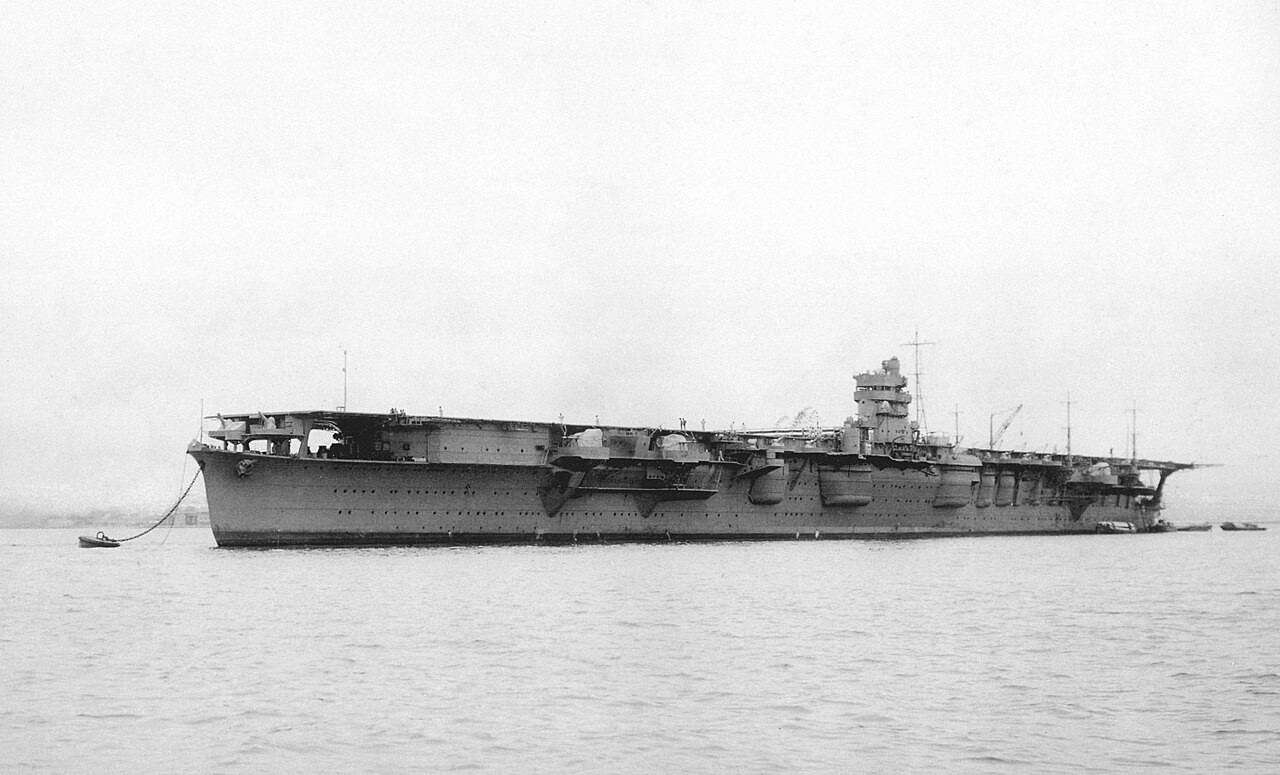
Hiryū’s first counterattack used dive bombers, accompanied by fighters. The second used torpedo-carrying attack aircraft. The Japanese organisation table records eighteen bombers in the first force, then nine of Hiryū’s attack aircraft and one from Akagi in the second. Fighter contributions also included machines from other carriers. The surviving flight deck was supporting more than its own original complement. M14
Those numbers describe particular formations. They do not establish the carrier’s normal capacity, her complete starting inventory or the number serviceable at every moment of the battle.
What the strike tables add
The first counterattack’s expenditure entry records twelve No.25 ordinary bombs and six No.25 land bombs. The second records nine Type 91 modification 3 torpedoes expended; the Akagi aircraft is noted as not releasing its weapon. Ten torpedo aircraft in a formation therefore did not mean ten torpedoes launched. M41
The tables’ enemy identifications and hit claims need a different check. Yorktown’s damage report records bombing, recovery of propulsion, then aerial-torpedo damage to the same ship. It does not support treating Hiryū’s two attacks as the disabling of two different American carriers. M18
A shrinking force
The Japanese narrative records further attack preparations with a much reduced aircraft force. Remaining, damaged, repairable and ready to launch were not interchangeable categories. A handful of usable machines could preserve a threat without restoring the original four-carrier strike organisation. M14
When American bombs struck Hiryū, the fight moved inside the ship. Fires and heat endangered machinery spaces; propulsion eventually failed. The report describes efforts to contain the damage, followed by evacuation to destroyers. The ship’s loss of aviation capability, loss of movement and final abandonment were successive events. M14
The original Japanese pages are available through the source notes. The readings used here are selected working translations, not a complete certified translation, and their report dates are not silently treated as American local dates.
Follow Hiryū Fights Back for the attacks and The People Left Behind for the evacuation’s human significance.