The aircraft that stayed with the fleet
Operation Tungsten depended on more aircraft than those sent to bomb Tirpitz. The carriers also needed protection while they launched and recovered the strikes. The Admiralty account assigned this work to Seafires from Furious and Wildcats from Fencer, with Swordfish providing anti-submarine patrols. YT-T22
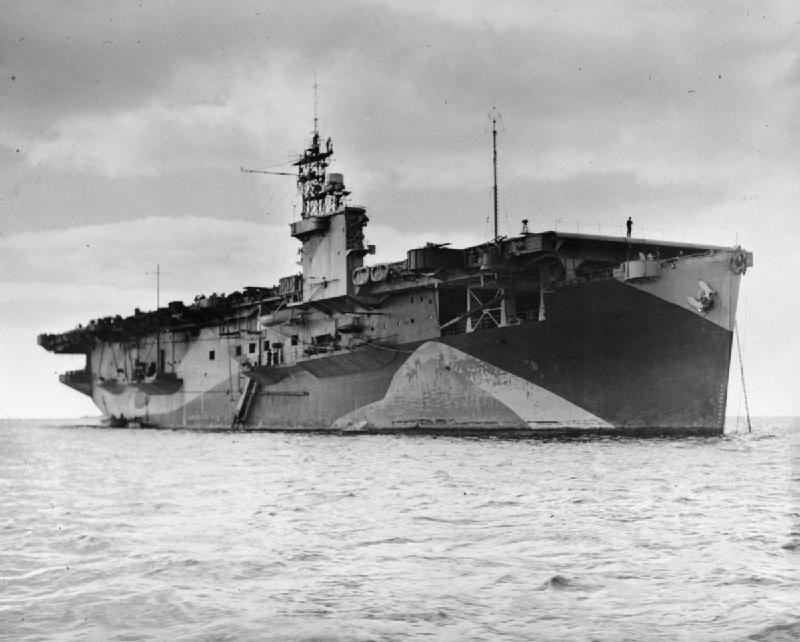
Fencer therefore belongs in the story even though her aircraft were not part of the striking force over the battleship. Her role explains why counting only the aircraft at the target gives an incomplete picture of the operation.
A mixed air group
The operation’s ship list places Fencer under Acting Captain W. W. R. Bentinck and records ten Wildcats, nine Swordfish and two 4-inch guns. These are the particulars supplied for Tungsten, rather than a complete account of her armament or aircraft throughout her service. YT-T22
The two aircraft types served different purposes. Wildcats contributed fighter protection; Swordfish searched for submarines. The familiar biplane that had attacked Bismarck with torpedoes in 1941 appears here in another task, supporting a carrier force in 1944. Aircraft type alone does not establish what a crew was ordered to do on a particular day.
Keeping the patrol going
The flying programme directed Fencer to keep four Wildcats continuously airborne and another four ready on deck. That was an instruction for maintaining protection through successive flights, not a claim that the same four machines stayed aloft throughout the operation. YT-T22
The narrative records that fleet-protection and anti-submarine aircraft were launched with the first strike. It then states that patrols from Fencer and Furious were maintained while the striking forces were away and the fleet remained near its operating position.
Its total of twenty-five fighters retained for fleet defence combines Seafires and Wildcats across the protecting force; it is not Fencer’s aircraft total. The nine Swordfish retained for anti-submarine work likewise should not be turned into nine aircraft continuously in the air. The summary and programme do not provide a complete sortie-by-sortie flying log.
Work beyond the attack photograph
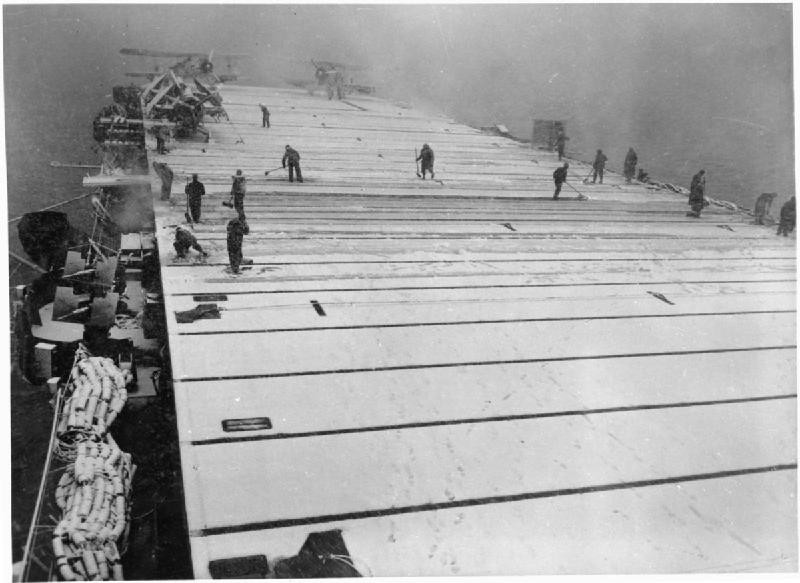
The accompanying archive photograph of men clearing Fencer’s snowy flight deck shows another demand on carrier operations. Its reproduced catalogue description places it during convoy work near Russia, with Swordfish visible aft. It has not been identified as a photograph of Tungsten and is included as context for life aboard the ship.
After the attack, Corsairs from Victorious relieved Furious’s Seafires on combat patrol. Protection continued as the fleet recovered its aircraft and turned away. Fencer’s contribution was part of that continuing work, not evidence by itself of a submarine destroyed or a German air attack defeated. YT-T22
Follow Tungsten and the Return to Repair for the attack’s results, and Pursuer or Searcher for the escort carriers whose fighters went with the strikes.