A connected ship profile

USS Yorktown

“Carrier lost” compresses a prolonged effort to keep a ship fighting—and then to save her.

Profile · Evidence and limits

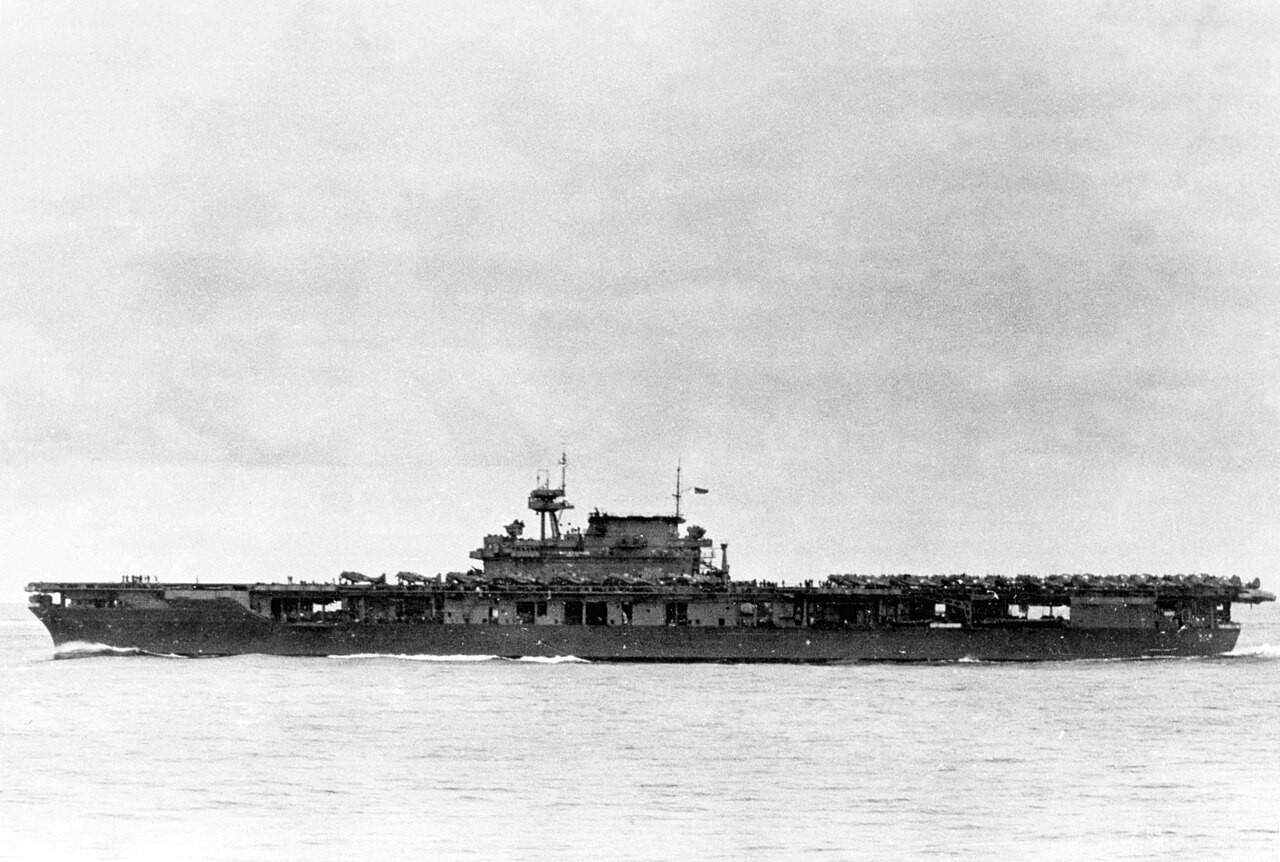
USS Yorktown underway, with aircraft arranged along her flight deck.

4 June 1942

Yorktown underway with aircraft on her flight deck at Midway. The catalogue’s approximate time is not treated as a precise launch record.

U.S. Navy / NHHC, 80-G-21627 · Source · Public domain (source statement)

Keeping the ship alive

The Bureau of Ships damage report follows Yorktown through bombing damage, controlled fires, aerial torpedo damage and severe listing. Her loss was not one uninterrupted moment of destruction. Damage-control and salvage efforts are central to the account. M18

The salvage attempt

The submarine attack that also struck Hammann interrupted salvage. Yorktown finally capsized on 7 June. The sequence matters when assessing both the human effort and the operational consequences. M18

The machinery behind a usable flight deck

A bomb damaged the boiler uptakes, the passages carrying exhaust from the boilers. Yorktown lost steam and stopped. Repairing the flight-deck opening therefore solved only one part of the problem: engineers also had to restore propulsion. The technical report records the ship recovering the ability to make about twenty knots before the later aerial-torpedo attack disabled her again. M18

Electrical distribution was another vulnerability. After the torpedo hits, the emergency diesel started but power could not be restored through the ship. A running generator alone was insufficient if the electricity could not reach the equipment that needed it. M18

During salvage, men removed weight, pumped and counterflooded to reduce the list. After the submarine attack the ship leaned less but sat deeper in the water. That is a useful distinction between balance and buoyancy: a more upright damaged ship was not necessarily a safer one. M18

Reading the damage report

Records had been lost. The report relies on accounts reconstructed by officers, a limitation that should remain attached to precise details extracted from it. Technical expertise does not make a report an independent eyewitness to every event.

Selected original-page scans have been inspected, including the opening account and a damage page. The retained extract does not establish the cover publication date or include every plate.

Her place in the larger story

The loss of Yorktown was part of the real American cost at Midway. A scenario in which all three American carriers are lost adds Enterprise and Hornet to that baseline; it must not count Yorktown twice.

Read what Midway changed and the alternative Japanese victory to follow those consequences. Earlier service, fuller equipment specifications and individual crew accounts remain profile research priorities.
Photographs

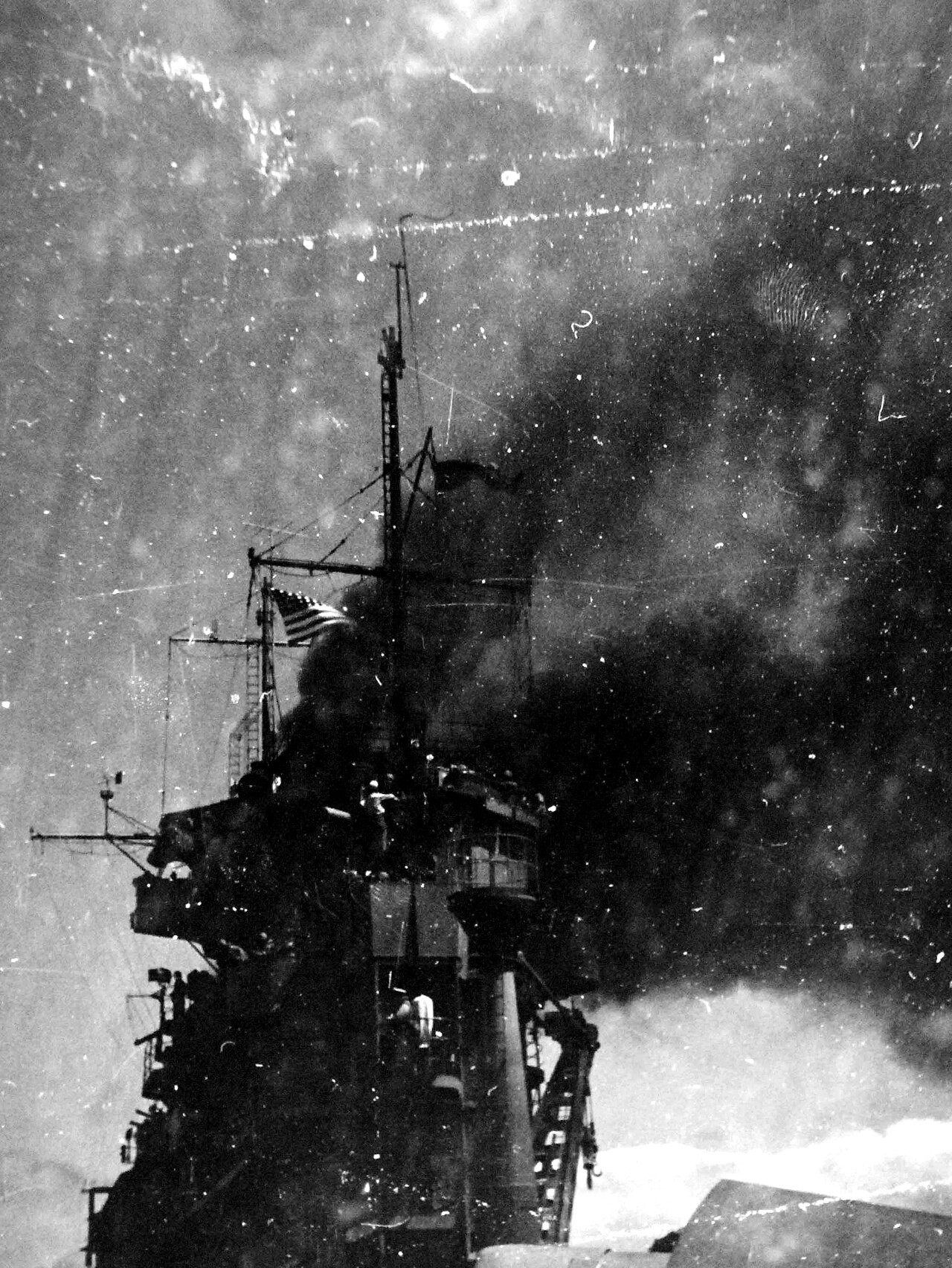
Yorktown’s island and mast partly obscured by dense smoke.

4 June 1942

Yorktown after the bombing attack. The photograph shows the smoke surrounding her island; the damage report supplies the account of internal damage and repairs.

U.S. Navy / National Museum of the U.S. Navy, 80-G-23978 · Source · Public domain (source statement)

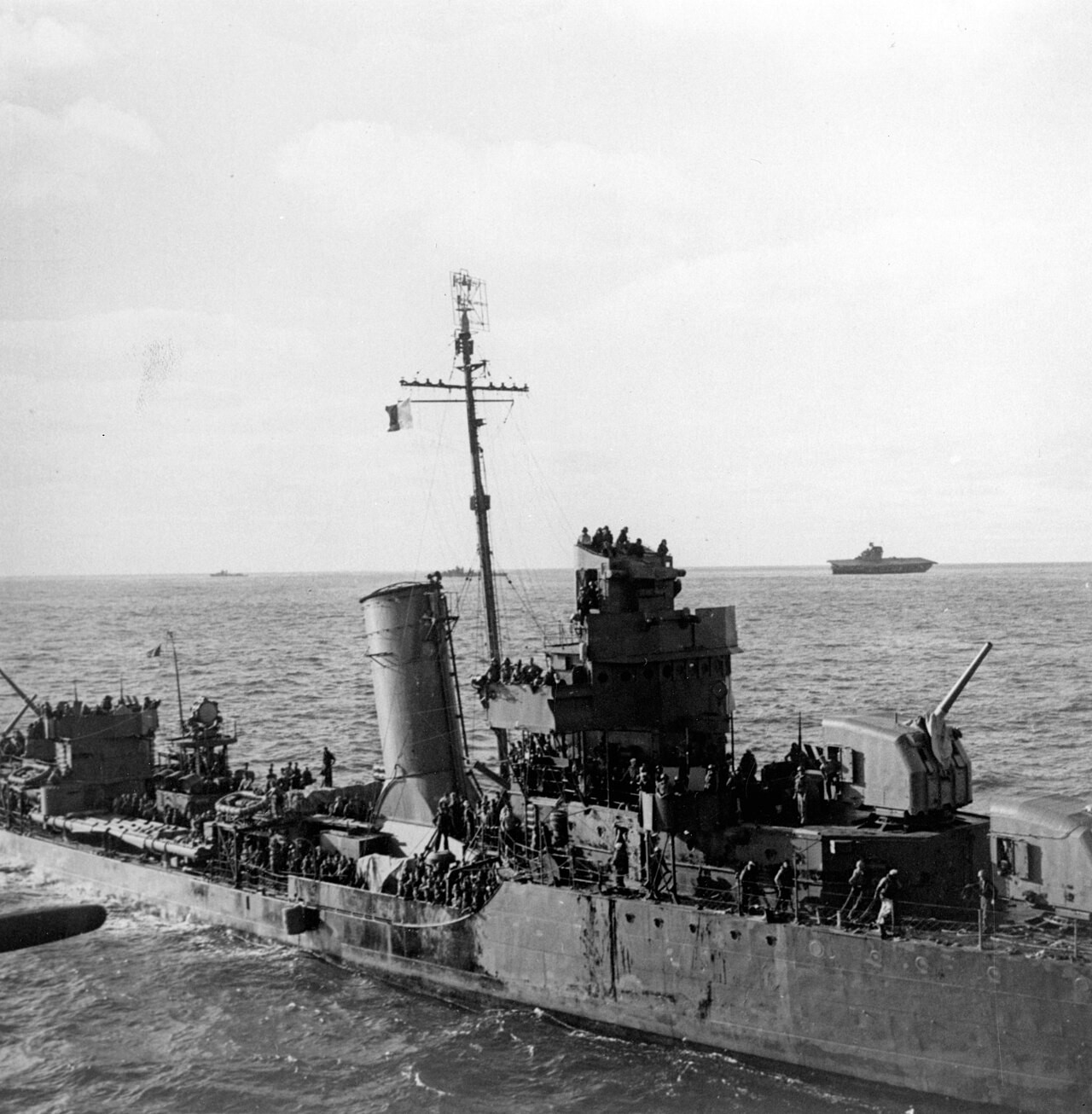
The destroyer Benham crowded with survivors, with Yorktown in the distance.

4 June 1942

Benham carrying survivors from Yorktown. The abandoned carrier is visible in the distance. A photograph of one rescue party cannot establish a final casualty total.

U.S. Navy / National Museum of the U.S. Navy, 80-G-32390 · Source · Public domain (source statement)

Evidence within reach

Sources for this page

Open a note for the passage, inspection status and limits. Source records link to the available documents.

M18Yorktown’s damage report

Technical report · third-party scan extract

Passage: PDF pp.4–6 / printed pp.1–3, paragraphs 1–16; damage plate on PDF p.17

The sequence of damage, recovery, interrupted salvage and loss of Yorktown. Fuel precautions, flight-deck repair, boiler recovery, loss of power and abandonment.

Checked: PDF pages 4 and 17 visually inspected; other text selectively examined. PDF pp.4–5 rendered and visually rechecked on 18 October 2026 for Hiryū Fights Back. PDF p.6 / printed p.3 visually inspected for towing, salvage, the submarine attack and final loss. Supporting-ship update: PDF p.6 visually rechecked for Vireo’s tow and Hammann’s salvage assistance.

Limits: Relies on officers’ reconstructed recollections after records were lost. Cover publication date and complete plate set are absent from the retained extract. Draws on the captain’s submissions, so is not independent corroboration of M04. Its 1645 torpedo-hit time differs from M04’s approximately 1620, and its 23-degree abandonment list differs from M04’s 26 degrees. The paragraph 10 elapsed-time arithmetic is inconsistent; no exact repair duration is inferred from it. The post-Hammann underwater explosion is tentatively attributed to depth charges, whereas M44 leaves the cause unresolved. The smaller list after the later attack did not mean improved overall buoyancy.

View full source record →

Photograph

Enlarged historical photograph

Web copy resized and compressed; original framing retained. Open image file ↗