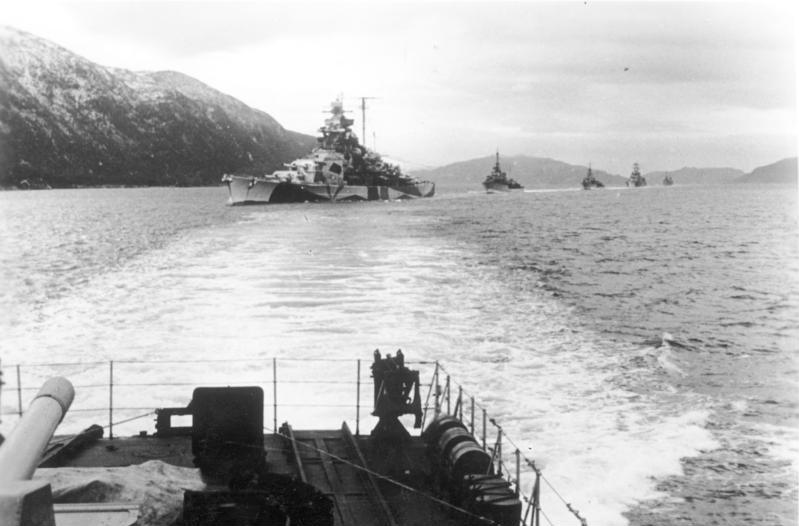

Following Bismarck
The story of Bismarck ends with a short Atlantic operation. Tirpitz’s story unfolds over a longer contest in northern waters, where the possibility of a sortie could affect convoy protection even while the battleship remained at anchor.
The first chapter examines that threat and its constraints. This profile follows the changing condition of the ship.
From damage to trials
Operation Source damaged Tirpitz in September 1943. The official despatches developed their account as returned witnesses and captured information became available. They should be read as stages of an investigation rather than independent confirmations of every detail. YT-T01
March 1944 trials showed substantial progress, but also a cruising-turbine vibration problem. A further programme of crew training followed in the plans. Material readiness, reliable sustained movement and full operational proficiency were not interchangeable. YT-T18
Repair after Tungsten
The April attack interrupted preparations for trials. Subsequent German entries forecast restricted readiness after supplies and emergency work, while retaining full readiness as the eventual objective. They do not prove the forecasts were met on schedule. YT-T19
A different role
September damage led to a decision to use Tirpitz as a floating battery. Keeping a ship in commission could preserve local usefulness without restoring its ability to raid convoys. YT-T11
RAF aircraft sank her near Tromsø on 12 November. The main-battery profile connects the guns to this changing readiness, while the air-defence profile follows the evidence from the attacks. A reconciled final weapon fit, detailed engineering and the people lost or rescued still need further work. The last-anchorage chapter explains what the presently checked operational records support. YT-T06